

Overfishing Demand for Omega-3 supplements sees huge increase in overfishing of sharks
Macrae, F. (2012). Demand for Omega 3 supplements sees huge increase in overfishing of sharks. Daily Mail.
They are the fashionable way to keep disease at bay. But expensive fish oil supplements may be doing little for our hearts while putting sharks in peril.
Conservationists have warned that our appetite for omega-3 supplements and capsules has led to rampant fishing of deep-sea sharks, whose huge livers are oozing with valuable oils.
Deep-sea sharks, including the goblin shark (pictured), are being killed for the oils found within their livers
With some species taking decades to mature, the deep-sea dwellers are extremely vulnerable to over-exploitation.
The charity Oceana Europe claims that ‘pirate’ fishermen are taking full advantage of laws that allow shark oil extracted from species caught outside the EU to be sold here.
The liver oils, including omega-3, are ‘the new gold,’ said the charity.
Marine wildlife scientist Allison Perry said: ‘The omega-3 tablets that we buy come from lots of different sources but there are some that are shark liver oil.
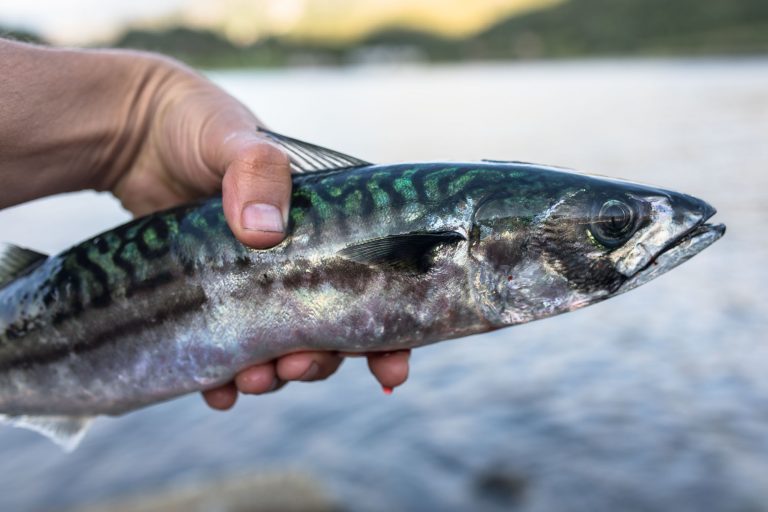
mackerel are also high in Omega-3
‘There are some vessels actively targeting deep-water sharks.’
The fats, which are particularly abundant in oily fish such as salmon and mackerel, are credited with boosting the health of the heart, body, and brain, with studies linking them to staving off ills from heart attacks to dementia and depression.
But several recent studies, including two large-scale round-ups, have questioned whether they help heart health.
In demand: Omega-3 supplements and capsules (such as the one pictured) come from many sources but some are shark liver oil
The most recent, published in the Journal of the American Medical Association, crunched together the results of 20 studies involving almost 70,000 people.
The review’s Greek authors said that omega-3 fats may help the heart by lowering levels of harmful blood fats, stopping harmful changes in heart rhythm, keeping the blood thin, or lowering blood pressure.
However, with studies coming to different conclusions, there was a need to clear up confusion.
Their analysis found that those who took omega-3 were no less likely to die of a heart attack or stroke than others.
The University Hospital of Ioannina researchers, however, did not completely dismiss the idea of supplementation.
They said that while their results do not back wide-scale use of omega-3, more research is needed on the impact on different types of heart problems. Dosage should also be investigated further.
A second-round up, by South Korean researchers in May, reached a similar conclusion.
And two years ago, the New England Journal of Medicine reported that heart attack patients who took omega-3 were no less likely to go on to have a second heart attack than those who did not supplement their diet.
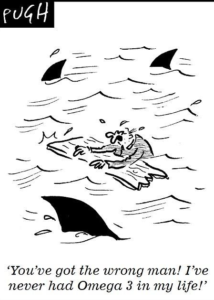
Craze: Demand for omega-3 fish oils is putting sharks in peril
Others say that fish’s health benefits may lie elsewhere.
Professor Tom Sanders, of King’s College London, told the Sunday Times: ‘There is a beneficial effect from fish and it be fish oil or it may be something else.
‘Heart disease rates have fallen a lot in the past 50 years anyway.
‘The biggest problem is people thinking that if they do take a supplement, they can do everything else wrong in terms of diet and lifestyle.’
But some experts believe the benefits to the brain are undisputable.
Dr. Alex Richardson, an Oxford University academic who has spent years researching the effect of omega-3 on behavior, learning, and mood, said: ‘It is an irrefutable fact that the brain tissue needs fatty acids.’